
Consumer Dining Habits Report: How America Eats in 2026
Frequency is flat, but ticket has lifted. Five behavioral shifts every operator should understand.
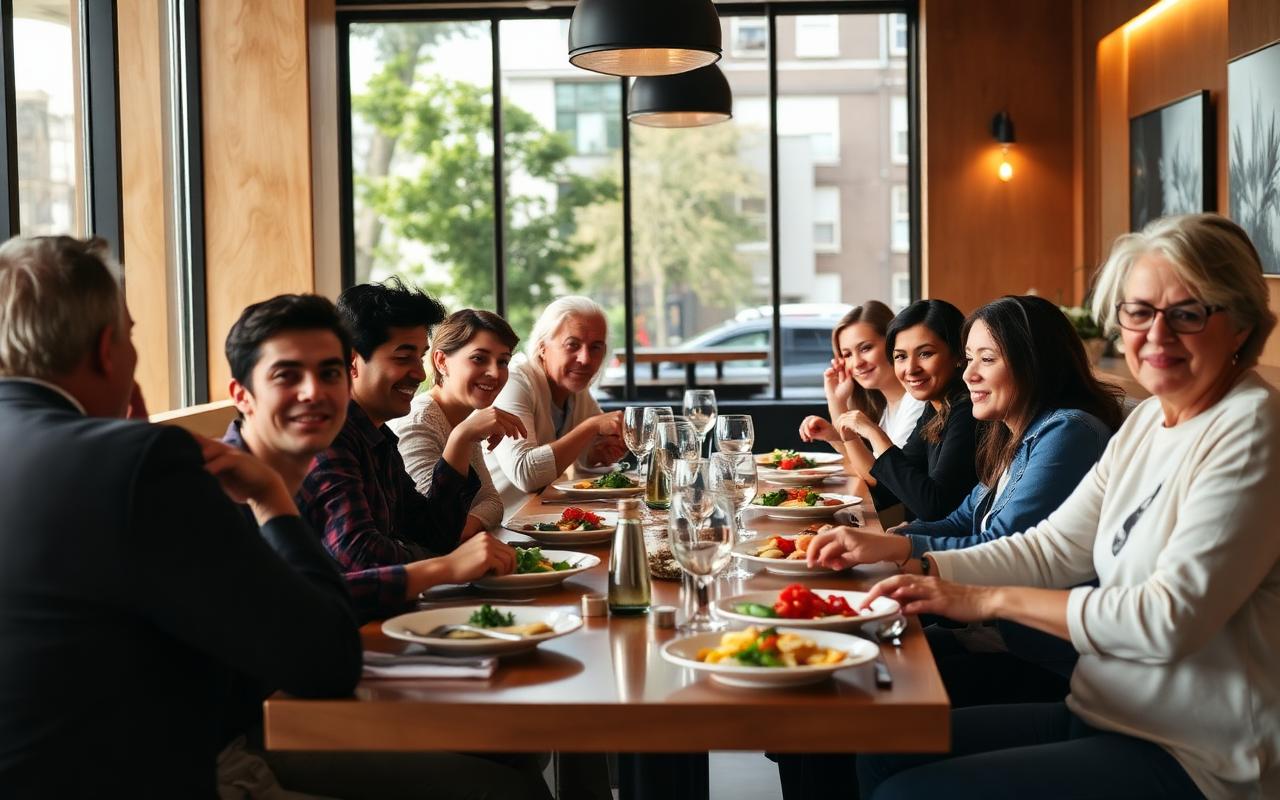
FSRI's spring 2026 Consumer Dining Habits study, fielded across 4,200 U.S. adults, paints a picture of a guest who is more selective, more deliberate, and more willing to pay up at the occasions that matter. Aggregate visit frequency is essentially flat year over year, but average ticket is up 6.8%, driven by trade-up within visits rather than added trips.
Shift 1: Fewer occasions, bigger occasions
Mid-week lunch visits declined 4.1% year over year, while Friday dinner and Sunday brunch visits grew 3.2% and 5.7% respectively. Guests are deferring small, transactional visits and over-investing in the occasions they do take. The implication for operators is significant: the guest arriving on a Friday or Sunday has a higher intent-to-spend threshold and is more receptive to premium offers, beverage trade-ups, and dessert suggestions than the same guest grabbing a Tuesday lunch.
Remote work patterns are the underlying driver. With roughly 34% of the workforce still on hybrid schedules in 2026, the mid-week lunch market has structurally contracted. Operators who thrived on office-district lunch traffic and haven't diversified their daypart mix are the segment feeling this most acutely. Evening and weekend programming — events, chef's specials, DJ nights — is increasingly the tool operators are using to fill the lunch-shaped gap.
Shift 2: Beverage is leading trade-up
Specialty beverages — cold-foam coffees, mocktails, agua frescas, premium sodas — accounted for 38% of incremental ticket dollars in Q1 2026. The beverage category is outperforming food in revenue growth because it sits at the intersection of three powerful consumer trends: the sober-curious movement (mocktail demand up 41%), premiumization within familiar formats (cold foam on an already-premium coffee), and the Instagram-worthiness incentive that drives ordering decisions for diners aged 21–38.
Shift 3: Loyalty members behave like a different species
Loyalty members visit 2.4x more often than non-members, tolerate 5.1% higher prices before reducing visit frequency, and are 3.8x more likely to try a new menu item within 30 days of its launch. They are also the most valuable word-of-mouth source in an era when organic social reach has declined: loyalty members share dining experiences at 2.9x the rate of non-members.
Despite this, 29% of fast-casual operators have not invested in a dedicated loyalty platform beyond a basic punch-card digital equivalent. The gap between operators with sophisticated loyalty programs and those without is now producing measurable same-store sales divergence — roughly 3.4 percentage points in favor of loyalty-enabled operators in FSRI's benchmark panel.
Shift 4: The dietary segment is consolidating
"Plant-forward" guests have absorbed strict vegetarians and flexitarians into a single behavioral cluster representing 27% of U.S. adults. This is the fastest-growing dining cohort by both absolute numbers and spending growth, and critically, it is not a young-skewing niche: the 35–55 demographic represents 44% of this group. Plant-forward guests have above-average household incomes, above-average dining frequency, and a measurably higher likelihood to return when they find a concept that meets their expectations.
Shift 5: Digital ordering plateaus, then specializes
Total digital share of off-premise orders has flattened near 39%, after years of uninterrupted growth. But within digital, native-app ordering is gaining share from third-party delivery for the first time in five quarters. Guests are discovering — or being actively recruited to discover — that native ordering is cheaper, faster, and more reliably accurate. Operators who have invested in their own app experience and native loyalty integration are seeing the economics of digital orders improve materially as the channel mix shifts inward.
What operators should do
Build programming for the bigger occasion — Friday and Sunday are your growth dayparts. Price beverages with conviction and invest in the visual presentation that drives social sharing. Treat loyalty as a separate P&L line, not a marketing promotion. Develop plant-forward options that appeal to adults, not just young urban diners. And audit your third-party delivery exposure — every order captured natively is worth 18–22 percentage points of margin versus the same order processed through an aggregator. The loyalty infrastructure required to capture these gains is covered in our fast casual analysis. For the technology layer enabling native ordering and loyalty personalization, see the 2026 restaurant technology stack report.
Frequently asked questions
Frequency is essentially flat year over year, but consumers are spending significantly more per visit. Average ticket is up 6.8%, driven by beverage trade-ups and premium item selection at chosen occasions.
Specialty beverage trade-up is the single largest contributor, accounting for 38% of incremental ticket dollars. Cold-foam coffees, mocktails, and premium agua frescas are the highest-growth sub-categories.
Friday dinner (+3.2%) and Sunday brunch (+5.7%) are growing. Mid-week lunch is declining (-4.1%), driven by remote and hybrid work patterns that have reduced office-district foot traffic.
Loyalty members visit 2.4x more often, tolerate 5.1% higher prices, are 3.8x more likely to try new menu items within 30 days, and share dining experiences 2.9x more on social media compared to non-members.
Plant-forward consumers — including strict vegetarians, flexitarians, and reducetarians — now represent 27% of U.S. adults. The 35–55 demographic makes up 44% of this group, making it a high-income, high-frequency segment, not a young niche.
Research analyst at the Food Service Research Institute, covering restaurant industry intelligence and menu innovation.