
Restaurant Technology in 2026: The Stack That Actually Pays Back
Operators are consolidating tech vendors and walking away from AI features that don't lift labor or throughput.
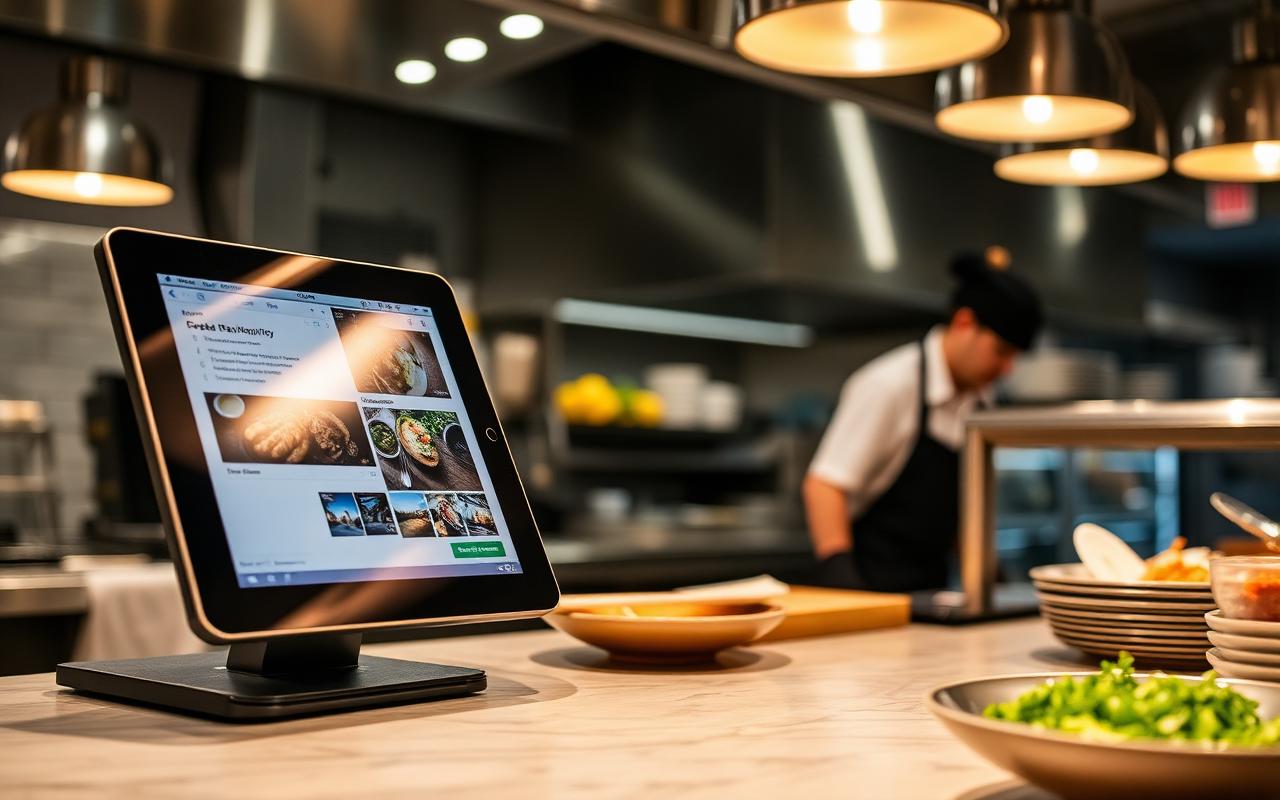
After three years of accelerated tech adoption, 2026 is the year operators are forcing their stacks to justify themselves. FSRI's Q1 Operator Tech Survey of 612 multi-unit decision makers found that 54% are actively consolidating vendors, and 31% have killed at least one AI pilot that failed to lift a measurable KPI within 90 days of deployment.
The accountability shift
Between 2022 and 2024, operators adopted technology at a pace driven largely by fear — fear of being disrupted, fear of falling behind competitors, fear of losing a generation of digital-first guests. That era produced a proliferation of vendors, integrations, and monthly SaaS fees that, in aggregate, added $0.18–$0.31 of cost per transaction without a clear ROI trail. The reckoning is now underway.
CFOs at multi-unit operators are increasingly requiring tech investments to clear the same hurdle rate as real estate or equipment capex. The informal rule emerging across the sector: if a technology cannot demonstrate a measurable improvement in labor productivity, throughput, waste, or guest frequency within two quarters, the contract is not renewed. That filter is removing a meaningful volume of vendors from operator stacks.
The tech that paid back
- Kitchen display systems with prep-time analytics — 78% report measurable speed-of-service improvement. The analytics layer — tracking cook times by station, shift, and daypart — is the differentiator versus basic KDS screens.
- Voice ordering at the drive-thru — 61% report improved order accuracy after the third optimization cycle. The first two cycles typically see accuracy below baseline; operators who quit before cycle three are missing the payback window.
- Inventory forecasting — 69% report waste reduction of 8% or more. Systems integrated with POS data and supplier ordering platforms outperform standalone forecasting tools by 19%.
- Loyalty personalization engines — 72% report a measurable lift in member frequency. Operators personalizing offers at the individual level — not just segment level — see 34% higher offer redemption rates.
The tech being deprecated
Generative-AI menu writers, AI-personalized email subject lines, and tabletop ordering tablets in full-service rooms all saw deprecation rates above 40%. The lesson is consistent: tools that automate copy or replace human interaction without solving a labor or throughput constraint are not surviving budget cycles.
Tableside ordering tablets are an especially instructive case. They were marketed as labor savers, but in most deployments they required a team member to assist guests with the device, added a cleaning burden between covers, and generated guest complaints about impersonal service. Net labor savings were near zero. Operators who retained them report doing so primarily for menu photography, not order capture.
"We stopped paying for software that produced output. We only pay for software that changes outcomes." — COO of a 240-unit fast-casual brand
Integration debt: the hidden cost
The average multi-unit operator now maintains 11.4 active tech vendors, down from 13.8 in early 2025, but integration complexity remains the industry's least-discussed cost center. FSRI estimates that managing integrations between a typical restaurant tech stack consumes 1.8 full-time-equivalent hours per week at the corporate IT level, per location cluster. Operators consolidating to unified platforms — where POS, KDS, inventory, loyalty, and workforce management share a common data layer — are recovering those hours and redirecting them to guest experience initiatives.
The 2026 reference stack
The lean, defensible stack converging across operators: a single POS of record, an integrated KDS with prep analytics, a loyalty/CDP platform, an AI-assisted forecasting layer, and a workforce-management system with predictive scheduling. Everything else is being justified or cut. Operators who achieve this consolidation typically see a net reduction of $0.07–$0.14 per transaction in tech costs while improving outcomes on every measured KPI. The throughput gains that tech enables compound with the kitchen efficiency measures covered in our menu engineering report. For how loyalty technology specifically impacts guest behavior, see the consumer dining habits report.
Frequently asked questions
Selectively. AI tools tied directly to labor productivity, throughput, or waste reduction are funded. AI tools that only produce content — email copy, menu descriptions — are being deprecated at rates above 40%.
Multi-unit operators average 11.4 active tech vendors in 2026, down from 13.8 in early 2025. The consolidation trend is accelerating as CFOs demand ROI clarity.
The informal standard now emerging: technology must demonstrate measurable improvement in labor, throughput, waste, or guest frequency within two quarters, or the contract is not renewed.
Inventory forecasting (69% of operators report 8%+ waste reduction) and loyalty personalization engines (72% report measurable frequency lift) are delivering the clearest and most consistent returns.
Most deployments required a team member to assist guests with the device, added cleaning burden, and generated complaints about impersonal service. Net labor savings were near zero — the tablets are now used primarily for menu photography rather than order capture.
Research analyst at the Food Service Research Institute, covering restaurant industry intelligence and menu innovation.