
The Future of Fast Casual: Five Forces Reshaping the Segment
Fast casual added $3.1B in sales in early 2026. The next phase will be defined by format compression, menu focus, and second-tier expansion.
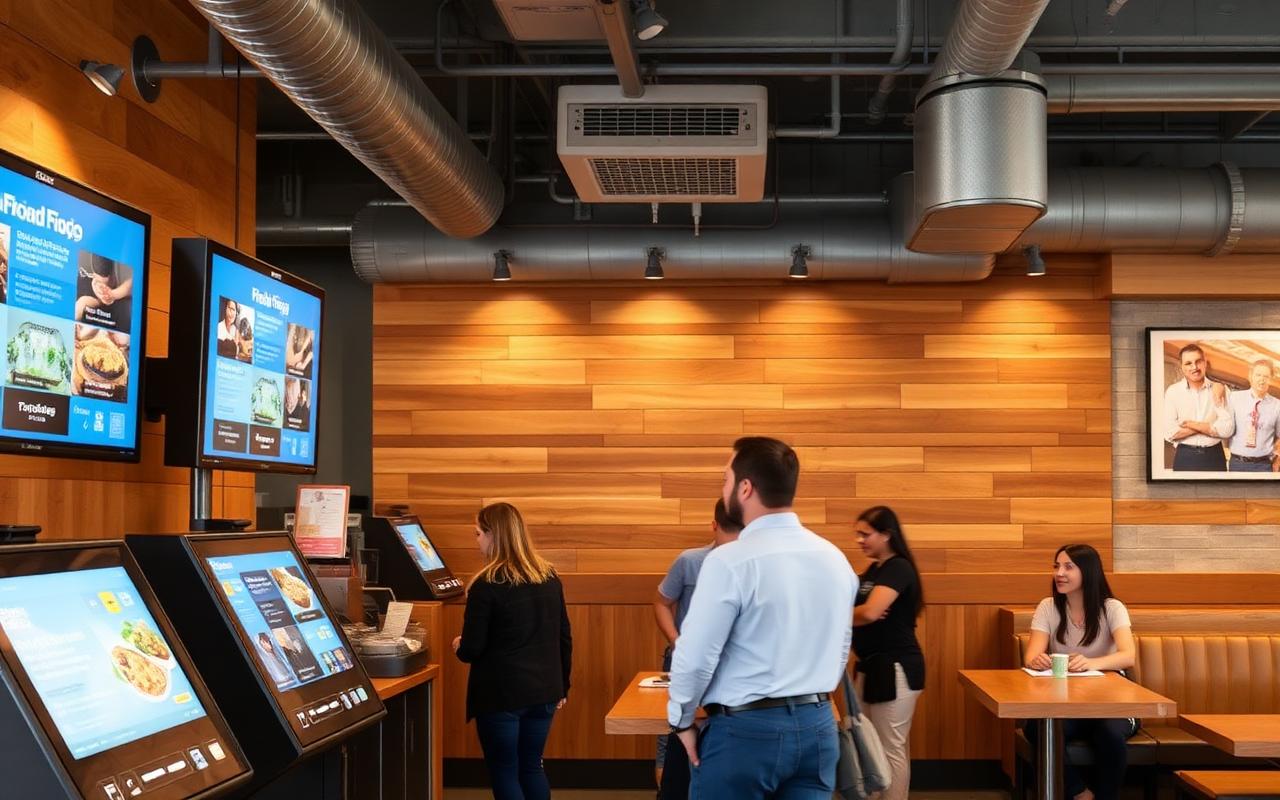
Fast casual was the only major segment to grow same-store traffic in Q1 2026. But the headline obscures a more interesting story: the segment is bifurcating. Operators with a clear culinary point of view are pulling away from generalists, and unit economics are quietly being rewritten by smaller footprints and tighter menus.
Force 1: Format compression
New fast-casual prototypes average 1,940 square feet, down from 2,860 in 2022. Walk-up windows, pickup-only counters, and dedicated digital staging zones have replaced traditional dining rooms in 38% of 2026 openings tracked by FSRI. The economic rationale is compelling: a 1,900-square-foot build-out cuts buildout cost by roughly $180,000–$240,000 compared to a full-size prototype, and occupancy as a percentage of revenue drops 2–3 points in mature markets where per-square-foot rent has escalated sharply.
The operations model follows the format. Smaller footprints run with 9–11 team members per peak shift instead of 14–18, and their throughput-per-labor-hour metrics consistently outperform larger formats by 8–14%. The constraint is transaction capacity — without a dining room as a queue buffer, digital-ahead ordering becomes non-optional, which in turn drives loyalty enrollment at a higher rate than traditional service models.
Force 2: The menu-focus dividend
Operators with fewer than 28 SKUs on the active menu post throughput rates 22% higher than those carrying 40+ items. The chains that pruned aggressively in 2025 are showing the cleanest 2026 P&Ls. The mechanism is straightforward: fewer items reduce training time, prep complexity, and ingredient count, which lowers both labor cost and waste simultaneously.
The discipline required to cut a menu is genuinely difficult. Popular items that don't earn their complexity are the hardest to remove — they represent emotional investments for both the culinary team and loyal guests. The chains executing this well are doing it through data: running contribution-per-minute analyses on every item and removing those below the threshold regardless of perceived guest attachment. Guest resistance to cuts is almost always lower than operators anticipate.
Force 3: Second-tier and exurban whitespace
Top-25 metros are saturating. Growth is moving to second-tier markets — Boise, Greenville, Des Moines, Lehigh Valley — where fast-casual penetration still lags the national average by 19 points. Per-unit economics in these markets are often more favorable: real estate is cheaper, labor competition is lower, and first-mover brand equity builds faster in markets with fewer established options.
FSRI tracked 340 fast-casual openings in second-tier and exurban markets in Q1 2026, a 28% increase from the prior-year quarter. Early same-store performance data from operators who expanded into these markets in 2024–2025 shows AUVs running 11% above the chain system average, partly due to lower occupancy costs and partly due to genuinely unmet consumer demand.
Force 4: Loyalty as the new menu
Members now account for 41% of fast-casual transactions. The marginal customer is no longer acquired through paid media; they are activated through tiered rewards, bonus point storms, and challenge-based engagement. Operators who have built loyalty databases of 500,000+ active members are running essentially independent marketing channels that cost a fraction of paid digital acquisition.
Force 5: Beverage as a P&L lever
Specialty beverage attachment lifts ticket by $2.40 on average. Fast-casual operators investing in lemonade programs, agua frescas, and cold-foam coffee are quietly building beverage businesses inside their food concepts. The highest-performing concepts have beverage attachment rates above 55% and are exploring standalone beverage windows as a format extension.
What to watch in H2 2026
The chains likely to lead the next cycle share three traits: a sub-30-SKU menu, a beverage program priced as a destination, and a real-estate strategy that prioritizes 1,800–2,200 sq ft second-tier endcaps. The segment's best growth window in the next 18 months is not in Manhattan or Chicago — it's in markets most operators still consider flyover territory. The macro data behind that thesis is laid out in the FSRI 2026 Foodservice Outlook. For operational detail on how menu discipline translates into margin, see our menu engineering for profitability analysis.
Frequently asked questions
Yes — fast casual added $3.1B in sales in Q1 2026 and was the only major segment to grow same-store traffic during that period.
Average new prototype is 1,940 square feet, down from 2,860 in 2022, reflecting the shift to off-premise heavy formats and pickup-only configurations.
FSRI data shows operators with fewer than 28 active SKUs run 22% higher throughput rates than those with 40+ items. The menu discipline is financially material, not just operational preference.
Second-tier metros like Boise, Greenville, Des Moines, and Lehigh Valley are the priority expansion targets. Fast-casual penetration in these markets still lags the national average by 19 points, and early movers are reporting AUVs 11% above system average.
Loyalty members now account for 41% of fast-casual transactions. They visit 2.4x more often than non-members and tolerate higher prices before reducing frequency, making the loyalty database the most defensible traffic source in the segment.
Research analyst at the Food Service Research Institute, covering restaurant industry intelligence and menu innovation.